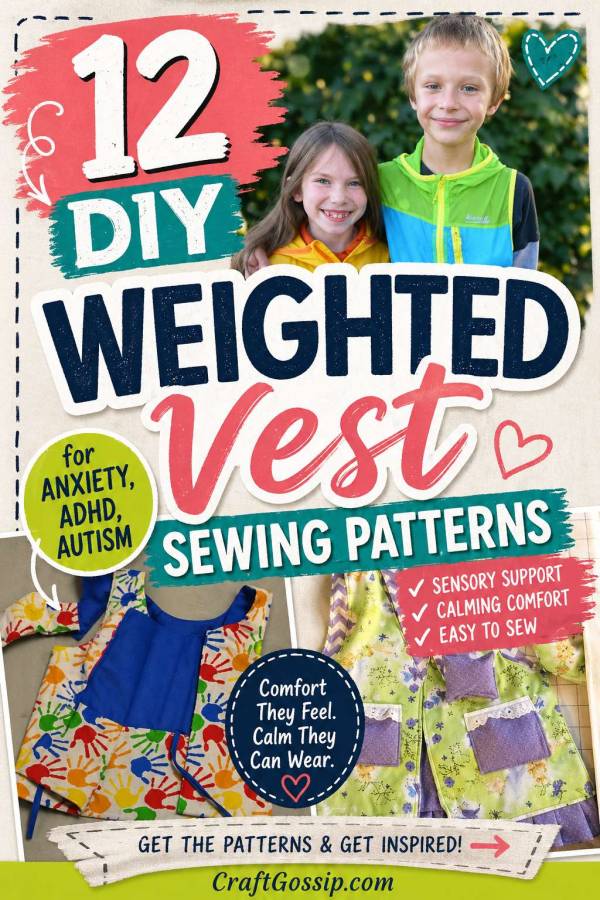
Weighted sensory vests are one of those sewing projects that feel especially meaningful because they are made with comfort, care, and real-life needs in mind. For children and adults who enjoy deep pressure input, a weighted vest can sometimes become part of a calming sensory routine at home, school, therapy, or during transitions.
I have seen so many makers look for weighted vest sewing patterns because buying a ready-made one can be expensive, and the bought versions are not always the right size, fabric, weight, or feel. That is where sewing your own can be such a practical option. You can choose soft fabric, add removable weights, make washable pockets, adjust the fit, and create something that feels less clinical and more like a regular vest or jacket.
Before we get into the patterns and tutorials, it is important to say this clearly: weighted vests are a sensory tool, not a cure or medical treatment. Research around weighted vests is mixed, and some reviews have found limited evidence for improving attention, behaviour, or autism-related traits. A weighted vest should always be used thoughtfully, with close observation, and ideally with guidance from an occupational therapist or other qualified professional.
What Is a Weighted Sensory Vest?
A weighted sensory vest is a vest or sleeveless jacket with weight added to it, usually through small removable pouches, sewn-in pockets, or evenly distributed weighted panels. The idea is that the gentle pressure from the vest provides deep pressure input to the body.
Some families, teachers, and therapists use weighted vests as part of a sensory support plan for children with sensory processing differences, autism, ADHD, anxiety, or regulation challenges. The goal is usually to help the wearer feel more settled, grounded, or aware of their body in space.
That said, every person responds differently. Some children love the feeling. Some dislike it immediately. Some only benefit from it during certain activities. Others may not respond at all. The most important part is watching the wearer’s comfort and response rather than assuming the vest will work the same way for everyone.
How Heavy Should a Weighted Vest Be?
A commonly used guideline is to keep the vest between 5–10% of the wearer’s body weight, starting lighter and increasing only if advised or appropriate. For example, a 50 lb child would generally not use more than 5 lb of total vest weight. NAPA Centre also recommends distributing the weight evenly and limiting use to short, purposeful periods rather than letting a child wear it all day.
The weight should be:
- Evenly spread across the body
- Removable whenever possible
- Comfortable while sitting, standing, and moving
- Light enough that the wearer can move freely
- Used only when the wearer is supervised and comfortable
A weighted vest should never be used as punishment, restraint, or a way to force a child to sit still. The wearer should be able to remove it or communicate that they want it removed.
Why Sew Your Own Weighted Vest?
Sewing your own weighted vest gives you much more control over the final result. You can choose a pattern that suits the wearer’s body, style, and sensory preferences. Some children prefer fleece because it feels soft and cozy. Others need cotton because they overheat easily. Some prefer a vest that looks like regular clothing so it does not stand out at school.
A handmade weighted vest can also be more budget-friendly. One practical method is to start with an existing vest and add removable weighted pockets or inserts. The I Love My Kids Blog tutorial uses an existing fleece vest, poly pellets, Velcro, batting, and fabric pockets as a quick DIY approach, which is one reason that style of tutorial is so helpful for sewists who do not want to draft an entire garment from scratch.
Supplies for Making a DIY Weighted Sensory Vest
Depending on the pattern or tutorial you choose, you may need:
- A vest sewing pattern or an existing ready-made vest
- Cotton, fleece, denim, canvas, or another sturdy fabric
- Lining fabric if needed
- Poly pellets, glass beads, or another washable weighted filler
- Fabric for removable weight pouches
- Batting or soft padding for comfort
- Velcro, snaps, or zippers
- A kitchen scale for measuring filler
- Sewing machine and basic sewing supplies
- Measuring tape
- Labels for identifying removable weight bags
For washable vests, removable weight pouches are often the easiest option. That way, the weighted inserts can be taken out before washing, and the vest itself can be cleaned more easily.
Avoid fillers that can spoil, rust, swell, smell, or break down in the wash. Rice, beans, sand, aquarium gravel, and similar fillers might seem cheap, but they are not always practical for a garment that may need regular cleaning.
Best Fabrics for Weighted Sensory Vests
Fabric choice matters more than people think. This is not just a sewing project; it is something that may sit against the body, around the shoulders, and across the torso.
Good fabric options include:
Fleece – soft, cozy, and often well tolerated by children who like warmth and softness.
Cotton canvas – sturdy enough to hold weight and easy to sew.
Denim – durable and can look like regular clothing, especially for older kids or adults.
Quilting cotton – good for lining or removable pouches, though it may need interfacing for strength.
Soft flannel – comforting, warm, and good for cooler climates.
Vest-weight outerwear fabric – useful if you want something that looks more like a normal jacket or outdoor vest.
Try to avoid anything scratchy, stiff, noisy, overly hot, or irritating around the neck and armholes. For many sensory-sensitive wearers, the seam placement, fabric texture, and closure method can be just as important as the weight.
12 DIY Weighted Sensory Vest Sewing Patterns and Ideas
Pattern for Weighted Vest or Jacket – Digital Download
Little Miss Kim’s Class: DIY Weighted Sensory Vest for kids with Autism
Weighted Sensory Vest – Fairfield World Craft Projects
How To Make Your Own Sensory Weighted Vest – I love My Kids Blog
Denim Weighted Vest by Fun and Function
How to Make a DIY Weighted Vest for Kids {10 Awesome Tutorials} | And Next Comes L
Make a Weighted Sensory Vest for Adults : 4 Steps (with Pictures) – Instructables
Hopeful Threads: Pattern Review – Weighted Vest by Ladybug Bend
Pieces by Polly: DIY Weighted Vests for Anxiety, ADHD1:43
, Autism, Sensory Issues & More
DIY sensory compression sheet – Heather’s Handmade Life
Check out some of our other articles
FAQ: DIY Weighted Sensory Vests
Can I sew my own weighted vest?
Yes, you can sew your own weighted vest using a pattern or by adapting an existing vest. The most practical DIY versions usually include removable weighted inserts so the vest can be washed and adjusted.
What should I fill a weighted vest with?
Poly pellets and fine glass beads are commonly used because they are small, smooth, and washable when used correctly. Always check that your filler is suitable for your laundering method and securely contained inside stitched pouches.
Can I use rice or beans in a weighted vest?
Rice, beans, and other food-based fillers are not ideal for a washable vest because they can absorb moisture, smell, spoil, attract pests, or break down over time.
How much weight should I put in a sensory vest?
A common guideline is 5–10% of the wearer’s body weight, but it is best to start lighter and seek advice from an occupational therapist.
Are weighted vests proven to help autism or ADHD?
The evidence is mixed. Some families and therapists report that weighted vests help certain individuals feel calmer or more focused, but research reviews have found limited or inconsistent evidence, especially for changing attention, behaviour, or autism characteristics.
Should a child wear a weighted vest all day?
No. Weighted vests are usually used for short, supervised periods. Some occupational therapy guidance suggests using them during specific focus-based activities rather than all day.
Can adults use weighted vests?
Yes, some adults use weighted vests for sensory support or grounding. Adult vests need careful fitting, strong construction, and even weight distribution.
Is a weighted vest the same as a compression vest?
No. A weighted vest uses added weight to create pressure, while a compression vest uses snug stretch or pressure from the fabric itself. Some people prefer one over the other, and some use neither.
More Sensory Sewing Ideas
If you enjoy sewing practical sensory-support projects, you may also like making weighted lap pads, weighted blankets, sensory-friendly clothing, fidget pillows, calm-down cushions, soft compression-style sheets, and simple fabric tools for classrooms or therapy spaces.
A handmade weighted sensory vest is not just another sewing project. It is a thoughtful, customizable garment that can be adapted to the person who will actually wear it. Choose soft fabrics, keep the weight removable, sew securely, and pay close attention to comfort. The best version is not the fanciest one — it is the one the wearer feels safe and comfortable using.