Toted as “the Dressmaker’s Resource” Pattern-Making.com is a great resource for the avid sewer. Although it does have lots of knitting and crochet patterns, it also has some great sewing and pattern making info. I was inpressed with the tutorial for drafting your own bra pattern as well as the simple instructions on how to pivot a dart. And if you ever wanted to delve into the world of pattern grading, they have some great beginner tips.
Comments
Have you read?
How to Price Handmade Christmas Items (Without Underselling During the Holidays)
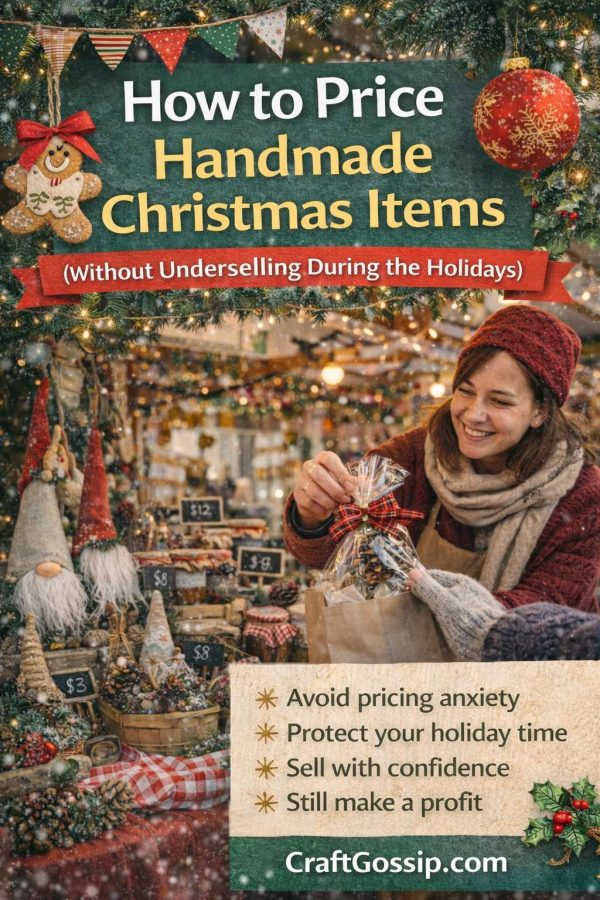
Christmas selling brings out a very specific kind of panic — even in confident sewists.
Suddenly, there’s pressure to be festive, affordable, competitive, and profitable all at the same time. You start second-guessing prices, comparing yourself to everyone else, and wondering whether you should “just lower it a bit” because it’s Christmas.
But here’s the truth most beginner sellers don’t realise until it’s too late: Christmas is the worst time to undervalue your work.
Let’s talk about how to price handmade Christmas items realistically, confidently, and in a way that keeps selling joyful — not exhausting.
Why Christmas Pricing Feels So Hard
Christmas creates urgency — for both sellers and buyers.
As a seller, you’re dealing with:
- Tight deadlines
- Increased demand
- Rising material costs
- Time pressure
- Emotional expectations around gifting
As a buyer, people are:
- Purchasing out of necessity
- Short on time
- Looking for meaningful gifts
- Willing to pay more for convenience
That’s not a reason to lower prices — it’s often a reason to raise them slightly.
Handmade Christmas Items Aren’t “Extras” — They’re Solutions
One mindset shift makes all the difference during the holidays.
You’re not selling decorations or crafts.
You’re selling finished gifts.
Handmade Christmas items solve real problems:
- “I don’t know what to buy them”
- “I’ve left it too late”
- “I want something meaningful”
- “I don’t have time to make it myself”
When you price from this perspective, confidence comes much easier.
Why Underselling at Christmas Backfires Fast
Lowering prices at Christmas feels generous — but it creates problems quickly.
Underselling leads to:
- Longer hours at the busiest time of year
- Burnout before Christmas even arrives
- Resentment toward orders
- Less time for your own family and traditions
If your prices don’t protect your time in December, they’re too low.
Start With the Real Holiday Costs (Not Just Fabric)
Christmas pricing needs to include more than usual.
In addition to materials and time, consider:
- Extra packaging
- Gift wrapping
- Labels and tags
- Market stall decorations
- Travel and setup time
- Rush orders
Holiday selling costs more. Your prices should reflect that reality.
A Simple Christmas Pricing Formula That Works
You don’t need a complicated system.
Use this as a baseline:
Materials + (Hourly rate × Time) + Holiday costs = Christmas price
Holiday costs might only add a small amount per item — but they matter.
Even a modest increase protects your energy and sanity.
Why “Small, Giftable” Items Can Still Be Priced Well
There’s a myth that Christmas items have to be cheap because they’re small.
In reality, small handmade items sell because they’re:
- Easy to gift
- Affordable luxuries
- Stocking fillers
- Thoughtful add-ons
Pricing them too low often signals “throwaway” instead of “special.”
A well-priced small item feels intentional — not cheap.
Comparing Christmas Prices Without Spiralling
It’s tempting to scroll Etsy or wander markets and panic over prices.
Instead of asking:
“Why are they cheaper than me?”
Ask:
- Are they mass-producing?
- Are they selling at wholesale margins?
- Are they undervaluing themselves?
You don’t need to match the lowest price to make sales — especially at Christmas.
Christmas Buyers Aren’t the Same as Everyday Buyers
This is important.
Holiday buyers:
- Expect higher prices
- Value speed and readiness
- Want gifts, not projects
- Care less about bargain hunting
Trying to price like it’s March instead of December is a common mistake.
When to Raise Prices (Yes, Even During Christmas)
If you’re:
- Selling out quickly
- Struggling to keep up
- Working late into the night
Those are signs your prices may be too low.
Raising prices slightly can actually slow demand to a manageable level — and increase profit at the same time.
Protecting Your Time Is Part of Pricing
Christmas is already busy.
Your pricing should:
- Limit over-ordering
- Respect cut-off dates
- Prevent rush pressure
- Allow you to enjoy the season too
A price that protects your time is a healthy price.
The Confidence Shift That Makes Christmas Selling Work
Instead of asking:
“Is this too expensive for Christmas?”
Ask:
“Does this price allow me to make this item with care, on time, and without stress?”
If the answer is yes, you’re pricing correctly.
Handmade Christmas items don’t need to be cheap to be desirable. They need to be well made, thoughtfully presented, and fairly priced.
And the sellers who respect their time during the holidays are the ones who enjoy selling — year after year.
Book Review – Sewing to Sell – The Beginner’s Guide to Starting a Craft Business
What I really want to know is how do I enlarge a small sized pattern to my size(20). I found lots of very beauty dress and pantsuits patterns from the 1950s and the 1960s and I want to be able to look at the outfit on the front and back of the pattern and sew by sight or learn how to create a pattern just by looking at the pattern. Can you please help!!!!!!
Deborah
PS I will begin sewing lessons very soon.
Deborah,
I wish I could give you some info on grading patterns, but that’s one of the skills that I’m also wanting to learn. And for exactly the same reasons – I have a collection of fabulous patterns from the 50s to the 70s that are all in the wrong size!!
–Anne