
CraftStylish has a tutorial to show you how.
Easy Pet Cat/Dog Bed Free Sewing Pattern
Sewing pattern: Make An Adjustable pet collar
Sewing Pattern Tutorial: Reversible pet bed with removable cover
Patterns, Techniques, Articles, Blogs, and other resources to learn how to sew
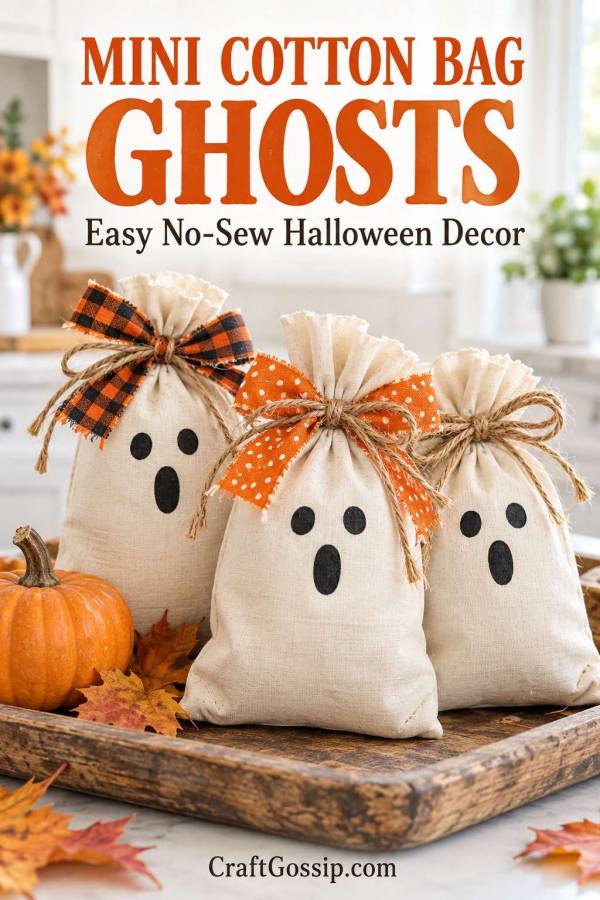
You know those little cotton drawstring bags that seem to accumulate in the craft cupboard? The ones left over from party favours, jewellery packaging or a project you were absolutely going to finish? They make surprisingly charming little Halloween ghosts.
Add some stuffing, a simple ghost face and a messy fabric bow, and you have a soft little decoration ready for a shelf, mantel or autumn display. No sewing machine, paper pattern or complicated construction required.
I particularly love the cream cotton and plaid combination in this project. It has that cosy farmhouse Halloween feel, with just enough spooky personality to sit happily beside pumpkins and a little “Boo” sign. These ghosts look startled rather than terrifying, which is very much my preferred level of haunting.
The supplied inspiration image is credited to Made with Love Country Crafts by Tracy. This tutorial recreates the cotton-bag idea with a few practical adjustments, including drawn or felt eyes instead of the upholstery pins pictured.
Make one as a quick afternoon craft, or create a little ghost family using bags in different sizes. It’s also a lovely excuse to use those fabric scraps that are apparently too precious to throw away.
For three mini cotton-bag ghosts:
Bag size is flexible. Small muslin favour bags work well, provided the weave is tight enough to contain the stuffing and show the face clearly.
Choose undecorated bags with a simple rectangular shape. Cream cotton gives a softer, vintage look, while bright white makes the black features stand out.
Skill level: Beginner
Estimated time: Around 15–20 minutes per ghost, plus any glue drying time
Finished size: Depends on your bags and how much fabric you gather at the top
Lay an empty bag flat with the opening at the top. Decide which side will be the front.
Leave room above the face for the gathered top and fabric bow. On a 15 cm-tall bag, the eyes will usually look best a little above the middle, rather than immediately beneath the opening.
Lightly mark the eye positions with a pencil if you need a guide. Keep the mouth below and between them.
Before drawing, slip scrap card inside the bag to stop the marker bleeding through to the back.
Use a black fabric marker to draw two small round or oval eyes. Add a longer oval mouth underneath.
Start with small shapes and build them up gradually. It is much easier to enlarge an eye than persuade a black marker to take it back.
Test the marker on a hidden area or a spare piece of similar fabric first. Some loosely woven cottons allow the ink to spread.
For a slightly different expression, try:
Allow the ink to dry and follow the marker manufacturer’s fixing instructions before stuffing.
If you prefer crisp shapes, cut the features from black felt and glue them on after filling the bag.
Pull the stuffing into small, fluffy pieces and add it gradually.
Push a little into the bottom corners first, then fill the centre. Aim for a softly padded shape that still shows the rectangular outline of the bag.
Don’t pack it tightly. Too much stuffing creates a rounded cushion and makes it harder to gather the top neatly.
Leave approximately 3–4 cm unfilled at the opening. This gives you room to close the bag and attach the bow.
If using fabric scraps, choose pale pieces and cut them small. Dark or bulky scraps can show through thin cotton and create lumps.
Pull the drawstrings to close the bag, then tie them securely.
Wrap a length of twine around the gathered area and tie a firm knot. This helps keep the shape in place and gives the ghost a rustic finish.
If the original drawstrings look untidy, tuck their ends behind the gathered top or trim the excess after tying securely.
Gently squeeze and reshape the bag until the stuffing is distributed evenly. Press the bottom a little flatter if you want your ghost to lean neatly against a shelf display.
For each ghost, cut three or four fabric strips approximately 2–3 cm wide and 15–20 cm long.
Combine a plaid strip with orange cotton, a small polka-dot print or plain cream fabric. Slightly frayed edges suit this project beautifully.
Stack the strips at different angles and pinch them together in the centre. Tie tightly with twine.
For a fuller bow, fold one longer strip into two loose loops before adding the shorter pieces. Wrap extra twine around the middle and leave a few loose ends.
The bow should look relaxed. If every strip matches perfectly, give it a little ruffle. This is Halloween decor, and the ghosts can cope with an uneven hem.
Position the bow over the gathered top, keeping the face visible.
Tie it onto the neck twine for a removable finish, or secure the centre with a small amount of fabric glue or low-temperature hot glue.
Let the glue set fully before handling. Adults should manage the glue gun when crafting with children.
Turn the ghost around and check that the bow is secure from the back as well as the front.
These little ghosts look particularly sweet grouped in threes. Use different bag sizes or vary the stuffing slightly to give each one its own shape.
Try arranging them:
Stuffed bags may need something behind them for support. Lean them against a sign, basket or books rather than expecting them to stand perfectly on their own.
For a hanging version, tie a loop of cotton string securely around the gathered top and hide the knot behind the bow.
If you’re decorating a larger space, our DIY Halloween ghost wreath offers another way to carry the ghost theme through your display.
Use cream bags, beige gingham, cotton lace and natural twine. The soft colours look lovely with wooden trays and pale pumpkins.
Cut bow strips from a worn plaid shirt or leftover dressmaking fabric. It adds texture and gives small scraps a useful second life.
Try purple, lime green or bright orange bows. Keep the faces simple so the fabric remains the main decorative detail.
Use smaller bags and lighter bows, then add hanging loops. Display them on indoor branches or cupboard knobs where they won’t interfere with opening the doors.
Keep the faces small. The simple eyes and oval mouth are what give these ghosts their charm.
Use less stuffing than you think. Add more only after checking the shape.
Choose lightweight bow fabric. Heavy upholstery fabric can overwhelm a small cotton bag.
Avoid sharp pin eyes. Drawn features or glued felt shapes achieve the look without exposed points.
Display indoors. Cotton, stuffing and paper details can absorb moisture outdoors.
These are decorative craft pieces rather than toys. Keep glued features, twine and loose fabric strips away from babies, pets and children who may pull them off.
Once Halloween is over, place your ghosts in a dry storage box without crushing the bows beneath heavier decorations.
You can untie removable bows and store them separately, then fluff the fabric and reshape the stuffing next year. Spot-clean the cotton if needed, avoiding the face and glued details.
That’s a lot of seasonal charm from a few little bags and some scraps. Give each ghost a different expression, let the bows be slightly wonky and tuck them somewhere that needs a cheerful Halloween touch.
And if three somehow become seven, I’m certainly not going to judge. Small ghosts have a habit of gathering.
I cannot get tutorial, just sends me to Threads magazine site, I had this and lost the pattern ty