Covering up your sewing machine when it’s not in use is essential for maintaining its longevity and performance. I prefer to call it “tucking my sewing machine into bed”. On a side note, I also put my car to bed at night, (put it into the garage). I believe these terms come from my Grandad, when he used to tell my grandma he was going to go put the car to bed. A childhood memory I can’t quite recall, but it makes me smile to think of him saying it.
Here’s why it’s important to cover your sewing machine:
Dust and debris can accumulate inside the sewing machine, affecting its moving parts and mechanisms. Over time, this buildup can lead to malfunctions, jamming, or even damage to delicate components like the needle, bobbin, or feed dogs. A cover acts as a barrier, preventing dust and debris from settling inside the machine.
Moisture and humidity can corrode metal parts of the sewing machine, leading to rust and deterioration. By covering the machine when it’s not in use, you protect it from exposure to moisture in the air, especially in humid environments. This helps to maintain the integrity of the machine’s components and prevents rust formation.
Prolonged exposure to sunlight can cause fading and deterioration of the exterior finish of the sewing machine. A cover provides shade and protection, preserving the appearance of the machine and preventing discoloration or damage from UV rays.
A cover acts as a protective layer, shielding the sewing machine from accidental scratches, bumps, or spills. This is especially important if you have other items stored or used near the machine, such as sewing supplies or crafting materials. By keeping the machine covered, you reduce the risk of surface damage that could affect its appearance and functionality.
A covered sewing machine stays cleaner and free from dirt or stains that can accumulate over time.
Covering up your sewing machine when it’s not in use is a simple yet effective way to protect it from dust, debris, moisture, sunlight, scratches, and surface damage. By taking this proactive step, you can extend the lifespan of your machine and ensure that it continues to perform reliably for years to come.
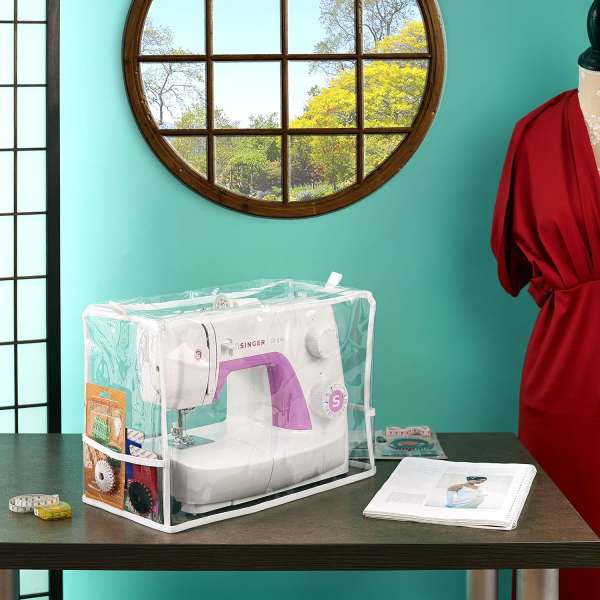
One of the standout features of this plastic cover is its practicality. Equipped with two convenient front-sided pockets, it allows you to organize your sewing accessories with ease, whether it’s sewing clips, markers, or safety pins. This added functionality ensures that your sewing essentials are always within reach, streamlining your sewing experience.
Durability is another highlight of the Addicted DEPO Sewing Machine Cover. Constructed with heavy-duty PVC and reinforced stitching, it promises long-lasting protection for your machine. Additionally, the easy-to-clean fabric ensures that maintenance is hassle-free, helping your sewing machine withstand the test of time.
You can also make your own sewing machine covers, here are some tutorials we have featured.
Free sewing pattern: Sewing machine cover
Sewing pattern: Custom sewing machine cover
Tutorial: Sewing machine cover with decorative stitching and pull tabs
Tutorial: Easy reversible sewing machine cover