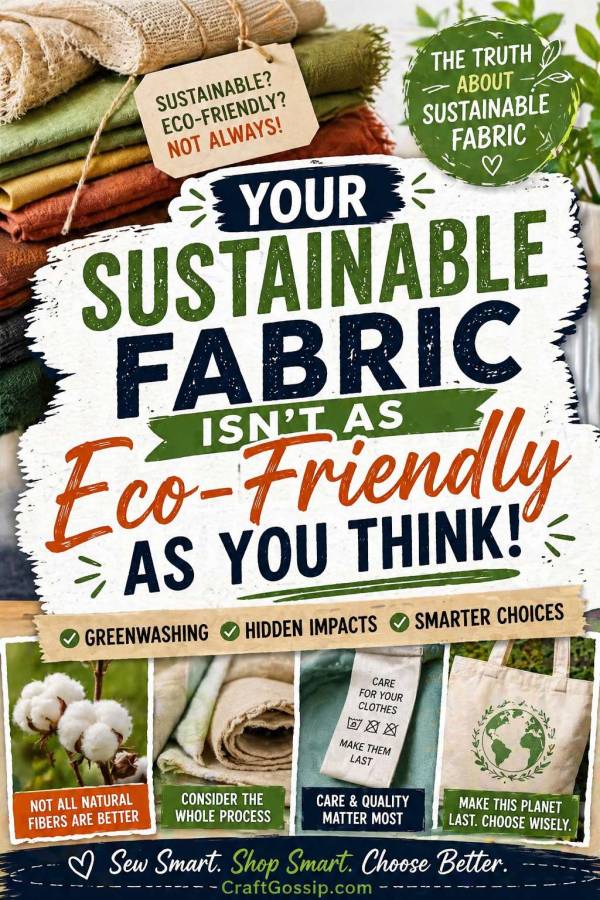
You know that feeling when you proudly buy “eco-friendly” bamboo fabric, only to later discover it’s about as green as a plastic water bottle? Yeah, me too. I’ve been burned more times than I can count by so-called sustainable textiles that turned out to be anything but. Let’s pull back the curtain on some of fashion’s dirtiest little secrets.
Take bamboo, for instance. That buttery-soft bamboo jersey we all love? Turns out it’s just rayon wearing a biodegradable disguise. The Federal Trade Commission actually had to crack down on brands falsely marketing bamboo fabric as environmentally friendly because the chemical process used to make it involves nasty stuff like carbon disulfide FTC warning on bamboo claims. The truth? Less than 5% of bamboo fabric is the truly sustainable mechanically-processed kind – the rest is chemically-intensive rayon.
Then there’s organic cotton, the golden child of eco fabrics. While it’s true organic cotton avoids pesticides (a definite win), it’s still a water hog. According to the Water Footprint Network, a single organic cotton t-shirt drinks up about 2,700 liters of water Water Footprint Network data – that’s three years’ worth of drinking water for one person! And because yields are lower, some organic cotton farms actually use more water per pound of fiber than conventional ones.
Recycled polyester seems like a feel-good choice, right? Giving plastic bottles a second life sounds great until you realize every wash releases microplastics into our waterways. The International Union for Conservation of Nature estimates that 35% of all microplastics in the ocean come from synthetic textiles IUCN microplastics report. And here’s the kicker – most “recycled” polyester comes from plastic bottles, not old clothes, so it’s not even solving fashion waste.
The vegan leather situation might be the biggest joke of all. That “cruelty-free” pleather jacket? It’s usually just plastic (PVC or PU) that’ll outlive your great-grandchildren. At least real leather biodegrades eventually. If you must have leather-look, consider cork or waxed canvas instead – they’re actually plant-based.
What really gets my goat is how fast fashion brands are cashing in on our good intentions. H&M’s Conscious Collection? Zara’s Join Life line? The Ellen MacArthur Foundation found that less than 1% of clothing is actually recycled into new garments Ellen MacArthur Foundation report. These “sustainable” collections are just greenwashing at its finest.
So what’s an eco-conscious sewist to do? Here’s what I’ve learned:
First, look for legitimate certifications like GOTS (Global Organic Textile Standard) or OEKO-TEX. These actually mean something, unlike vague terms like “eco-friendly.”
Second, consider deadstock fabrics – those are the leftovers from big manufacturers that would otherwise go to waste. Many small indie fabric shops specialize in these.
Most importantly? Make less but make it last. The most sustainable garment is the one already in your closet. Every time we mend, remake, or repurpose, we’re sticking it to the disposable fashion industry.
I’ll be the first to admit I’ve been duped by “sustainable” fabric claims more times than I’d like to admit. But the more we talk about greenwashing, the harder it is for brands to get away with it. Have you discovered any fabric fibs in your sewing journey? Let’s swap stories and keep each other informed.