Let me tell you about the time I almost killed my sewing machine trying to sew a canvas tote bag. I was feeling confident—maybe too confident—and decided to stack up multiple layers of canvas, interfacing, and webbing straps. As I forced the bulky seam under my machine’s presser foot, I heard the sound that every sewist dreads:
Crunch.
My machine groaned, the needle snapped clean in half, and I sat there, heart racing, realizing I was using the wrong tool for the job.
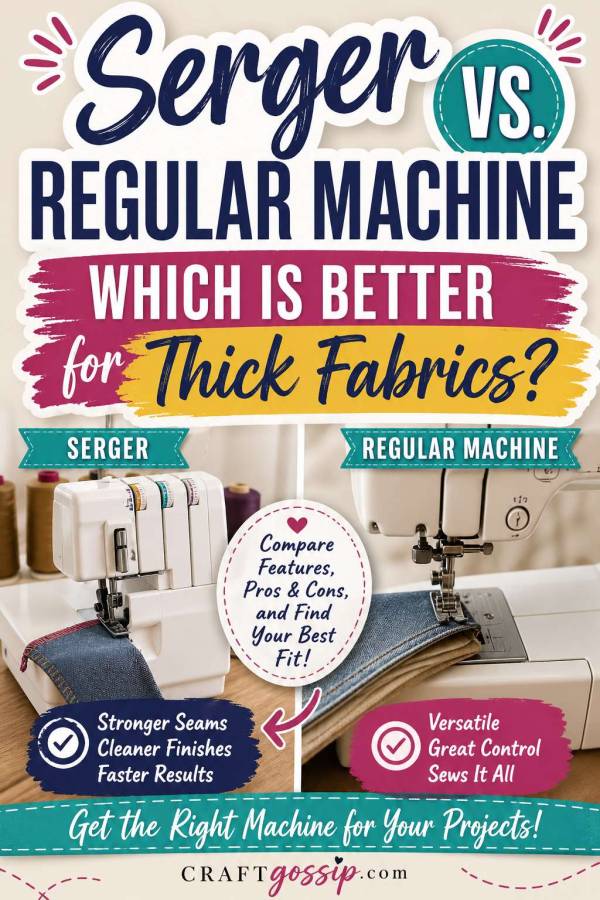
That was the moment I learned the difference between sewing thick fabrics with a regular sewing machine vs. a serger—and why it matters so much when working on heavy-duty sewing projects like denim, canvas, and faux leather.
The Thick Fabric Dilemma: Not All Machines Are Built Alike
Here’s the hard truth: not every sewing machine is designed to handle heavyweight fabrics. Your standard home sewing machine might be perfect for quilting cotton or lightweight apparel fabric, but when it comes to canvas, upholstery, or multiple layers of denim, it often can’t keep up.
Think of it this way:
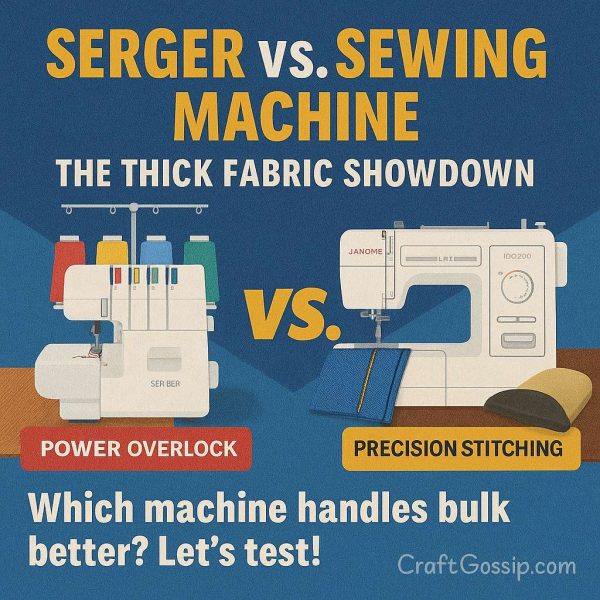
- A regular sewing machine is like a reliable sedan. It’s great for daily driving—zippers, topstitching, hems, and buttonholes—but you wouldn’t take it off-road.
- A serger (also known as an overlock machine) is more like a 4×4 SUV. It’s designed for power and speed, especially when finishing seams and working with stretchy or thick fabrics.
When a Regular Sewing Machine Still Shines
Don’t get me wrong—there are still plenty of reasons to love and rely on your regular sewing machine, especially when working on thick fabrics strategically. Here’s when I still reach for my Janome HD3000:
Detail Work
Need to sew precise topstitching, install a zipper, or add a buttonhole? A regular sewing machine gives you far more control than a serger ever could. The presser foot options, stitch types, and adjustable stitch lengths make it ideal for clean, professional results.
Thinner Layers of Heavy Fabric
If you’re sewing 2–3 layers of denim, a high-powered mechanical sewing machine like my vintage Singer or the Janome HD series can absolutely handle it—especially with the right needle and heavy-duty thread.
Decorative or Specialty Stitches
Want to use your favorite scallop stitch or decorative leaf motif? Sergers can’t do that. Your sewing machine’s built-in stitch library is perfect for custom finishes that sergers simply don’t offer.
Pro Tip: I think of my Janome like a precision scalpel—it may not be strong enough to bulldoze through layers, but it’s amazing for everything that requires finesse.
When to Use a Serger on Thick Fabrics
Now, let’s talk about where sergers really shine, especially when you’re sewing bulky or challenging materials.
Seam Finishing
Sergers create those clean, professional overlocked seams you see in store-bought garments. For heavyweight materials that fray like crazy—canvas, corduroy, denim—serging edges gives you a fray-proof finish that no zigzag stitch can match.
Handling Bulk Like a Boss
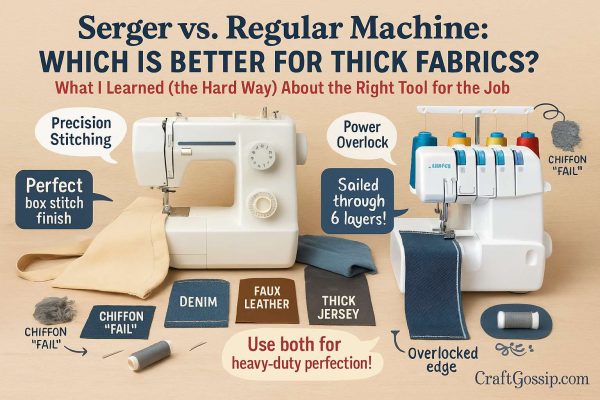
My Juki MO serger handles 6 layers of denim like it’s cutting through butter. It powers through seams that make my regular sewing machine tremble. If you’re making jeans, bags, or heavy-duty workwear, a serger can save you hours of frustration.
Stretchy Fabrics
Thick jerseys and ponte knits stretch in ways that challenge traditional machines. A serger’s differential feed system ensures smooth seams that don’t pucker or wave. Perfect for thick knit dresses, athletic wear, or anything you want to move with you.
Funny story: I once tried serging a single layer of chiffon thinking it would be faster. It got sucked into the feed dogs and… disappeared. There’s definitely a learning curve!
The Real-World Test: Serger vs. Sewing Machine Showdown
Last month, I decided to put both machines head-to-head on the same thick fabric projects. Here’s what happened:
| Project | Regular Machine | Serger |
| Denim jeans (4-layer seams) | Struggled, needed hand cranking | Sailed through like butter |
| Canvas tote bag handles | Perfect straight stitches, good control | Couldn’t do detailed box stitches |
| Faux leather jacket | Needed walking foot + slow stitching | Handled curves and seams with ease |
The Verdict: Use Both for Heavy-Duty Success
Here’s what I’ve learned: there’s no single “best machine” for thick fabrics—the magic happens when you use both machines together.
- Use your regular machine for precise stitching, reinforcement, and detail work.
- Use your serger for fast, durable seams that won’t fray—even through thick layers.
It’s like having a superhero duo in your sewing room: the artisan and the powerhouse. And when you learn how to balance their strengths, your sewing becomes smoother, faster, and more enjoyable.
Final Thoughts: Choose the Right Tool for the Fabric
So if your machine is struggling, your thread is breaking, or your seams look bulky and uneven, take a step back. It might not be your skills—it might just be that you’re using the wrong machine for the job.
Ask yourself:
- Are you sewing layers of denim or canvas?
- Are you dealing with thick knits or faux leather?
- Are your seams unraveling despite zigzag stitching?
If the answer is yes, consider bringing a serger into your sewing setup—or learn to use your existing one with confidence.
Have You Had a “Crunch” Moment?
I’d love to hear your stories about sewing thick fabrics. Did you have a “needle-snapping” moment like I did? What machine setup works best for your heavy-duty projects?
Drop your comments below, or tag me with your setup pics—I’m always excited to see how other sewists handle the bulk!